If you’ve ever stopped mid-sentence and wondered “Wait… is it nosy or nosey?” you’re definitely not alone. This tiny spelling choice has tripped up writers for decades. It looks simple on the surface, yet it hides a surprising amount of language history, regional variation, and communication nuance.
Let’s clear it up properly. No fluff. No confusion. Just real, practical clarity you can actually use in writing.
Table of Contents
Why “Nosy vs Nosey” Confuses So Many People
Here’s the funny part: both spellings look correct at first glance.
You’ve probably seen:
- nosy neighbor
- nosey coworker
- “Stop being so nosey!”
So your brain naturally assumes both are valid in equal measure. But English rarely plays fair like that.
The confusion mostly comes from:
- regional spelling differences American vs British English
- informal writing online
- older texts mixing both forms
- spoken language influencing spelling habits
And honestly, English loves chaos. This is just one more example.
Straight Answer: Correct Spelling Nosy or Nosey?
Let’s settle it clearly.
✔ Preferred spelling:
Nosy
✔ Less common variant:
Nosey
That’s it. Simple.
| Form | Status | Usage |
|---|---|---|
| nosy | Standard | Global, formal + informal |
| nosey | Variant | Informal, less preferred |
So if you’re asking is it nosy or nosey, the safe, professional answer is nosy.
Nosy Meaning: What It Actually Describes
The nosy meaning is straightforward but carries emotional tone.
A nosy person is someone who shows excessive curiosity about other people’s private lives.
Think:
- asking personal questions that aren’t their business
- eavesdropping on conversations
- watching others too closely
This connects closely with intrusive curiosity meaning, which refers to curiosity that crosses personal boundaries.
Examples of nosy behavior in sentences:
- “My neighbor is so nosy she knows my schedule better than I do.”
- “He got nosy and started reading messages on the screen.”
- “Stop being nosy and focus on your own work.”
Nosey Meaning: Is It Different?
The nosey meaning is identical in definition. There is no semantic difference.
However:
- It feels more informal
- It appears less in modern writing
- It can look slightly outdated or careless in professional contexts
So when comparing nosy vs nosey difference, the meaning stays the same—but the credibility of the spelling changes.
Nosy vs Nosey Difference Explained Simply
Let’s break it down cleanly.
- Nosy = standard spelling used in dictionaries
- Nosey = variant spelling, mostly informal
That’s the entire difference.
If you remember one thing, remember this:
Spelling affects perception, not meaning.
Even though both mean the same thing, readers judge professionalism based on spelling consistency.
Where “Nosy” Comes From (And Why It Makes Sense)
The word comes from:
- “nose” + “-y”
The metaphor is simple:
Someone who “sticks their nose into things.”
It paints a visual picture of prying into private matters, which is why the word feels so intuitive.
Over time, “nosy” became the dominant spelling because English tends to simplify endings.
Nosy Pronunciation vs Nosey Pronunciation
Here’s where things get even easier.
nosy pronunciation:
/ˈnoʊ.zi/
nosey pronunciation:
Exactly the same
There is no difference in sound.
So whether you say “nosy” or “nosey,” you’re speaking identically. The difference only exists on paper.
Nosy in American English vs British English
A common misconception is that spelling depends on geography.
Let’s clear that up.
nosy in American English:
- Standard spelling
- Used in newspapers, books, academic writing
nosey in British English:
- Occasionally appears in informal writing
- Not the preferred standard form
British vs American English usage reality:
Both regions overwhelmingly prefer nosy today.
This makes it part of broader spelling differences American vs British English list, but not a strong divide like “color vs colour.”
When Should You Use Nosy or Nosey?
Here’s where writing skill actually matters.
Use “nosy” when:
- writing emails
- preparing essays
- publishing blogs
- communicating professionally
“Nosey” may appear when:
- writing informal text messages
- quoting dialogue
- mimicking casual speech
This ties directly into context-based word choice and audience awareness in writing.
If you’re unsure, choose:
nosy every time
Nosy Person vs Nosey Person: Real-Life Meaning
A nosy person or nosey person behaves in ways that push social boundaries.
Common signs:
- asks overly personal questions
- listens in on private conversations
- reads things they shouldn’t
- watches others closely without invitation
This is classic intrusive behavior.
But here’s the nuance:
Not all curiosity is bad.
That brings us to an important distinction.
Curiosity vs Intrusion: Where the Line Gets Blurry
Curiosity becomes a problem when it crosses boundaries.
| Type | Description |
|---|---|
| Healthy curiosity | Asking respectful, relevant questions |
| Intrusive curiosity | Prying into private matters without consent |
That shift is where someone becomes a nosy person instead of just interested.
Nosy vs Nosey Examples in Real Life
Let’s make this practical.
Nosy vs nosey examples:
- “Stop being nosy about my salary.”
- “She got nosey and checked my phone.”
- “That nosy coworker always listens in.”
- “He acted nosey during the meeting.”
Same meaning. Different spelling tone.
Common Spelling Mistakes People Make
English learners often mix this up with other similar issues.
Frequent mistakes:
- writing “nosey” in formal emails
- switching between both spellings in one document
- assuming “nosey” is British standard
- overcorrecting and second-guessing “nosy”
This is where spelling consistency becomes important.
Workplace Communication Etiquette: Why This Matters
You might think this is a small detail. It isn’t.
In professional settings, spelling affects credibility.
Why it matters:
- shows attention to detail
- reflects communication quality
- influences tone in writing perception
Using “nosey” in a formal email can subtly weaken your message.
This is part of professional communication clarity and workplace communication etiquette.
Email Writing Tips for Clean, Professional Tone
If you’re writing at work, follow these simple rules:
- Use “nosy,” not “nosey”
- Keep tone neutral, not emotional
- Avoid labeling people harshly
- Focus on behavior, not character
Example:
Instead of:
“You’re so nosey.”
Write:
“This may come across as intrusive.”
That’s stronger, calmer, and more professional.
Language Nuances in English: Why This Word Exists at All
English is full of tiny variations like this.
Why?
- historical spelling evolution
- regional influence
- informal speech shaping written language
That’s why language nuances in English matter so much for writers.
Even small choices like “nosy or nosey” reflect bigger patterns in how English adapts.
Writing for a Global Audience
If your content reaches international readers, consistency becomes critical.
Best practice:
- Stick to “nosy”
- Avoid mixing variants
- Maintain clarity across all platforms
This improves clarity in emails and essays and strengthens trust with readers.
Tone in Writing: Why This Word Carries Emotional Weight
Calling someone “nosy” isn’t neutral.
It can sound:
- playful
- annoyed
- judgmental
- humorous
Tone depends on context.
For example:
- “You’re nosy!” (light teasing)
- “That’s a nosy question.” (mild criticism)
Understanding tone in writing helps prevent misunderstandings.
Spelling Consistency: Small Detail, Big Impact
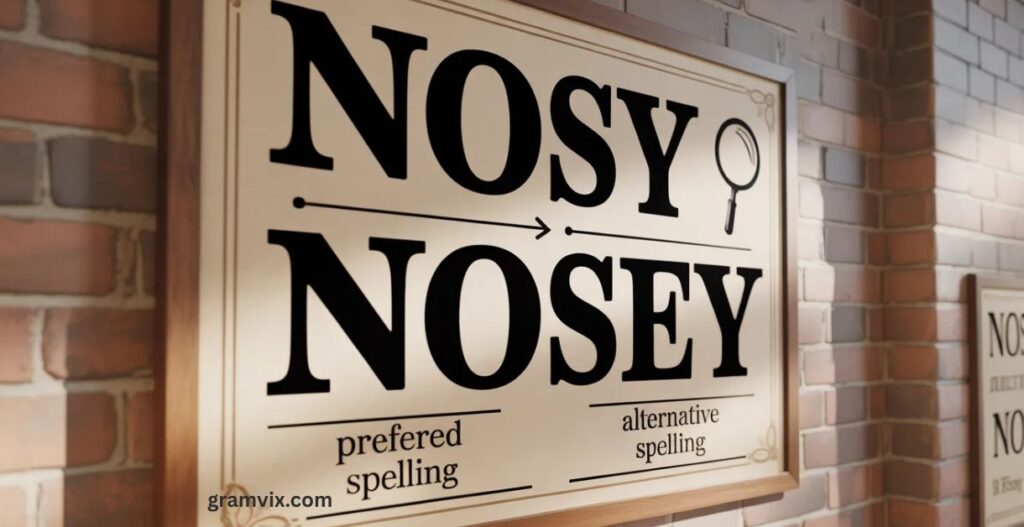
In writing, consistency signals control.
Switching between “nosy” and “nosey” in the same article:
- looks careless
- distracts readers
- weakens authority
So always choose one form and stick with it.
That’s core spelling consistency.
Audience Awareness in Writing
Ask yourself:
Who is reading this?
If your audience is:
- students → use “nosy”
- professionals → use “nosy”
- global readers → still “nosy”
That’s strong audience awareness in writing in action.
Final Verdict: Nosy Wins Every Time
Let’s end this clearly.
- Nosy is the standard, correct spelling
- Nosey exists, but it’s informal and outdated in most contexts
- Meaning stays the same, but perception changes
- Professional writing always prefers “nosy”
So next time you pause mid-sentence wondering is nosey correct spelling in British English, you already know the answer.
Stick with nosy, and you’ll never go wrong.
If English has one lesson here, it’s simple:
Small spelling choices can quietly shape how people see your writing.
And now you’ve got that edge.