If you’ve ever paused mid-sentence wondering, “Is it tieing or tying?” you’re not alone. This tiny spelling dilemma trips up students, professionals, and even seasoned writers. It looks simple. It isn’t.
So let’s clear it up once and for all.
But here’s the real value: you won’t just memorize the answer. You’ll understand why is tying correct, how the rule works, and how to apply it to similar words. By the end, you won’t hesitate again.
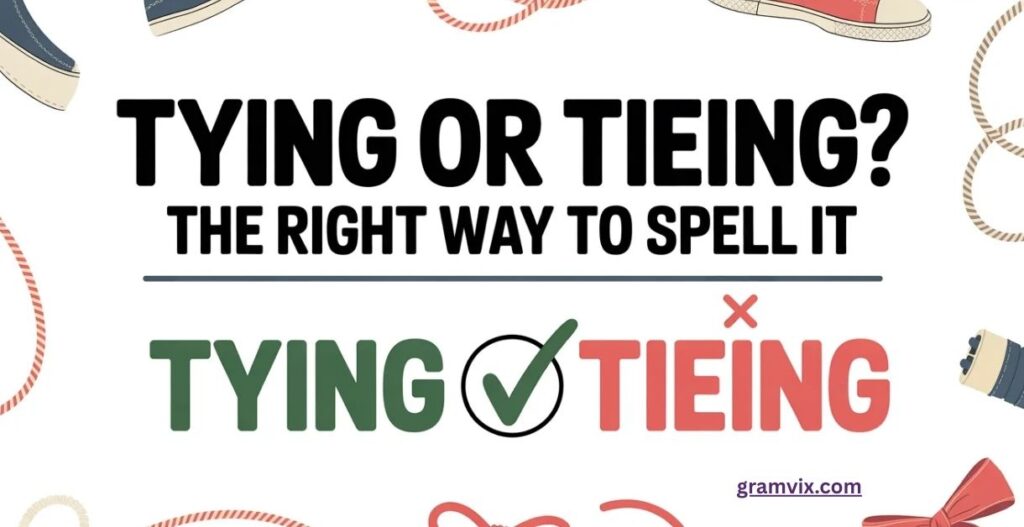
Quick Answer: Is It Tying or Tieing?
Let’s get straight to it.
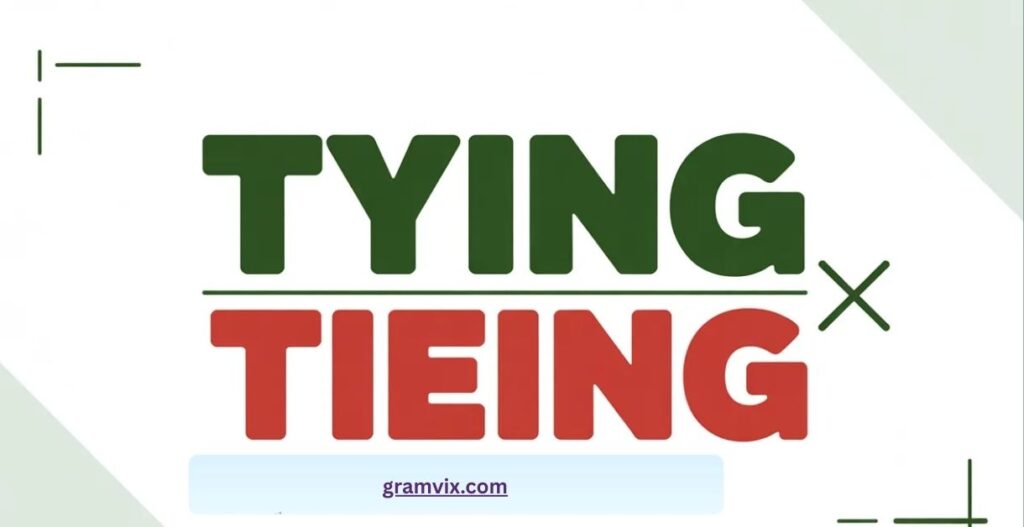
- ✅ Tying is correct.
- ❌ Tieing is incorrect.
If you’re asking, how do you spell tying? — the answer is simple:
Tie → tying
That’s the only standard spelling in modern English.
You’ll see “tieing” pop up online, especially in casual writing. However, it remains a mistake according to dictionaries, style guides, and formal grammar references.
Now let’s unpack the rule behind it.
Why “Tying” Is Correct
The answer lies in English spelling rules, specifically those governing verbs ending in -ie.
English may seem chaotic, yet many patterns repeat. Once you understand this one, it becomes predictable.
The -ie to -y Rule
When a verb ends in -ie, you:
- Drop the -ie
- Add -ying
This is known as the -ie to -y rule, and it applies consistently.
Look at these examples:
| Base Verb | Correct -ing Form |
|---|---|
| tie | tying |
| die | dying |
| lie | lying |
| vie | vying |
| untie | untying |
| belie | belying |
Notice the pattern?
- tie → tying
- die → dying
- lie → lying
- vie → vying
- untie → untying
- belie → belying
This pattern is part of broader spelling rules in English grammar that prevent awkward letter combinations.
Why not keep “ie” and just add -ing?
Because English avoids stacking vowels in unnatural ways. “Tieing” looks clumsy and disrupts flow. The language evolved to favor smoother visual structure.
That’s the practical side of adding -ing to verbs.
Why “Tieing” Looks Right (But Isn’t)
Here’s where the confusion starts.
Most verbs simply add -ing:
- walk → walking
- jump → jumping
- paint → painting
So your brain thinks:
“Tie + ing = tieing.”
Makes sense logically.
But English has irregular spelling patterns. And this is one of them.
Think about this comparison:
- “Dieing” looks wrong immediately.
- “Lieing” feels off.
- “Vieing” doesn’t sit right either.
Your eye recognizes the mistake because you’ve seen the correct forms often. The same logic applies to “tieing.”
This is one of many grammar confusion words that trick people because the base word seems stable.
Is “Tieing” Ever Correct?
Short answer: No.
In modern American and British English, tieing spelling is considered incorrect.
Older texts from centuries ago sometimes used different variations. However, language standardization removed that form long ago.
Today:
- Spellcheck flags it.
- Dictionaries reject it.
- Style guides disallow it.
So when discussing tying vs tieing, there’s no debate. Only one survives.
Tying Meaning: What Does “Tying” Actually Mean?
Understanding usage helps cement spelling.
The tying meaning depends on context, yet it always comes from the verb “tie.”
It can mean:
- Fastening something with a knot
- Securing or binding
- Connecting or linking
- Achieving an equal score
- Getting married (informal idiom)
Let’s break those down.
Physical fastening
- tying shoes
- tying a rope
- tying a ribbon
Competition context
- tying a game
- tying the score
- tying for first place
Figurative use
- tying ideas together
- tying up loose ends
- tying someone down
Idiomatic
- tying the knot
Every one of those examples uses tying, never tieing.
Real-World Examples of Tying
Let’s make this concrete.
Tying or Tieing Shoes?
Correct:
She is tying her shoes before practice.
Incorrect:
She is tieing her shoes.
When teaching children how to spell, this example works well. It’s common and memorable.
Tying or Tieing a Game?
Correct:
The team is tying the score in the fourth quarter.
They are tying a game with seconds left.
Incorrect:
They are tieing a game.
Sports commentary often uses this form in the present continuous tense, which makes correct spelling critical.
Tying the Knot
They’re tying the knot in June.
This idiom appears frequently in wedding announcements and social media posts.
You will never see “tieing the knot” in reputable publications.
Grammar Breakdown: Present Participle Spelling
To truly understand this topic, you need to know what “tying” is grammatically.
It’s the present participle of the verb “tie.”
In English verb forms, present participles:
- End in -ing
- Form continuous tenses
- Act as adjectives or gerunds
Examples:
- She is tying her hair. (present continuous tense)
- Tying takes patience. (gerund form)
This falls under present participle spelling, which has several patterns:
Common Patterns for Adding -ing to Verbs
| Verb Type | Rule | Example |
|---|---|---|
| Most verbs | Add -ing | play → playing |
| Verbs ending in -e | Drop -e | make → making |
| Consonant-vowel-consonant | Double final consonant | run → running |
| Verbs ending in -ie | Change to -y + ing | tie → tying |
See how structured it actually is?
English isn’t random. It’s patterned.
The Difference Between Tying and Tieing
If someone asks for the difference between tying and tieing, here’s the honest answer:
| Word | Status | Correct? |
|---|---|---|
| tying | Standard English spelling | ✅ Yes |
| tieing | Misspelling | ❌ No |
There is no semantic difference. Only correctness.
The phrase tying or tieing the right way to spell it in english always leads to the same conclusion.
Case Study: Real Writing Errors
Let’s look at real examples of common spelling mistakes in business writing.
Case Study: Marketing Email Error
A retail company once sent a newsletter saying:
“We’re tieing up holiday deals.”
Subscribers noticed. Screenshots circulated. The brand looked careless.
One small spelling mistake damaged credibility.
Case Study: Academic Essay
A student wrote:
“The author is tieing themes together.”
The professor marked it wrong and deducted points for grammar errors.
That’s why mastering grammar rules for tying matters. Precision builds authority.
Tying In or Tieing In?
Another common confusion: tying in or tieing in
Correct:
- tying in ideas
- tying in a theme
- tying in research
Incorrect:
- tieing in
Example:
The conclusion is tying in earlier arguments.
That’s proper usage within academic writing.
Why Is Tying Correct? The Linguistic Reason
Language often evolves for efficiency.
Stacking vowels like “ieing” makes pronunciation awkward and visual recognition slower.
Compare:
- tieing
- tying
The second looks cleaner. Faster to process.
English tends to simplify clusters of vowels in inflected forms. That’s why verbs ending in -ie follow the -ie to -y rule.
It’s structural consistency, not arbitrary choice.
Common Spelling Mistakes in English That Follow Similar Patterns
“Tying” isn’t alone.
Here are other words people misspell under similar rules:
| Incorrect | Correct |
|---|---|
| dieing | dying |
| lieing | lying |
| vieing | vying |
| belieng | belying |
These fall under broader spelling mistakes in English that stem from misunderstanding transformation rules.
Master this pattern and you fix multiple errors at once.
Memory Trick That Actually Works
Here’s a simple way to remember.
If you wouldn’t write:
- dieing
- lieing
Then don’t write:
- tieing
Group them together mentally:
die → dying
lie → lying
tie → tying
Your brain remembers patterns better than isolated facts.
Quick Reference Table: Tying vs Tieing
| Feature | Tying | Tieing |
|---|---|---|
| Standard English | Yes | No |
| Follows -ie to -y rule | Yes | No |
| Found in dictionaries | Yes | No |
| Used in academic writing | Yes | No |
| Accepted in business communication | Yes | No |
Keep it simple.
Grammar Tips to Avoid This Mistake
When dealing with English verb forms, pause and check the base word ending.
Ask yourself:
- Does it end in -ie?
- If yes, drop the -ie.
- Add -ying.
This applies every time.
These small writing tips save embarrassment later.
Why English Spelling Rules Matter
Some people shrug and say, “It’s just one letter.”
That one letter signals credibility.
Correct spelling:
- Builds trust
- Signals education
- Shows attention to detail
- Strengthens authority
Before and After Examples
Let’s correct real sentences.
Incorrect:
- She is tieing her hair.
- They are tieing for first place.
- He kept tieing the rope too loosely.
Correct:
- She is tying her hair.
- They are tying for first place.
- He kept tying the rope too loosely.
One letter changes everything.
Final Takeaway: Mastering Tying or Tieing
If you remember one rule, remember this:
Drop the -ie. Add -ying.
The debate over Tying or Tieing isn’t really a debate. The language settled it long ago.
Whenever you hesitate, think of the pattern:
- tie → tying
- die → dying
- lie → lying
- vie → vying
- untie → untying
- belie → belying
Spelling feels confusing until you see the structure.
After that, it clicks.
And once it clicks, you won’t second-guess tying spelling again.