If you’ve spent any time searching “wallpostmedia com,” you’ve probably noticed something odd. Half the results call it a content platform. A few others swear it’s a “premium wall art” tool. That mismatch alone tells you something worth knowing before you trust anything written about it.
So let’s clear it up. I pulled the live site, read through its categories, checked its bylines, and looked at what’s actually published. Here’s the real picture of wallpostmedia.com, not the recycled guesswork floating around other “review” blogs.
Table of Contents
What WallPostMedia.com Actually Is
At its core, wallpostmedia.com is a general-interest content blog. It’s not a proprietary software tool. It’s not a design platform. It doesn’t sell wall art, templates, or creative assets of any kind. That claim, which shows up on a handful of thin SEO sites, appears to be an error that got copied from one bad source to another until it looked like consensus.
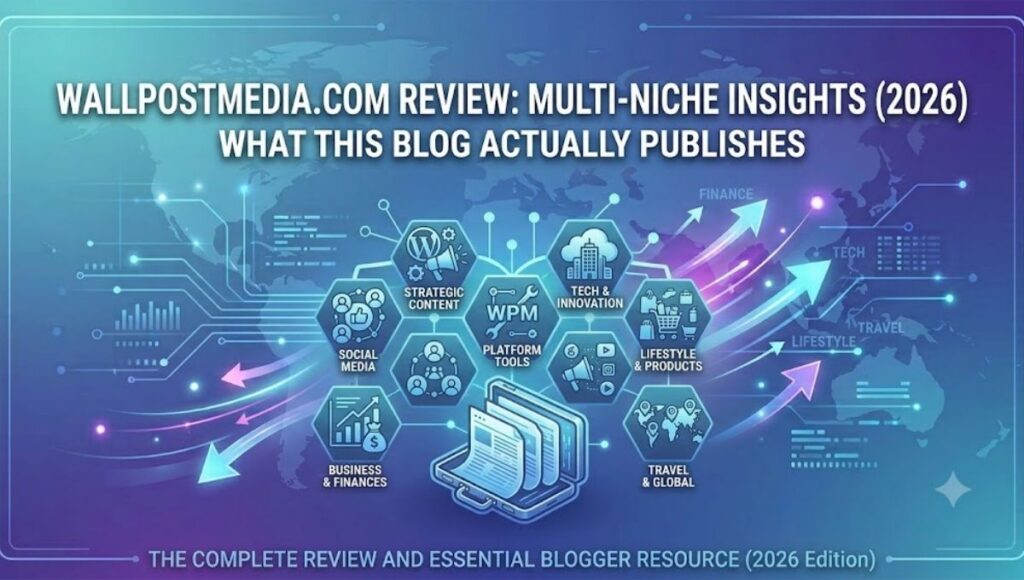
What the site really does is publish articles across a handful of broad categories:
- Business
- Health
- Lifestyle
- Technology
- Education
- Finance
- Real Estate
A guest-post-driven blog, not a proprietary platform
The structure looks like a lot of SEO-focused publishing sites you’ll find across the web. Articles are written by outside contributors rather than a single in-house editorial team, and the topics jump around a lot, from CBD isolate to server virtualization to studying MBBS abroad. That range is a strong signal this is a guest-post and backlink outlet, not a niche authority site with a tight editorial focus.
The categories, at a glance
| Category | Typical topics found |
|---|---|
| Business | Faxing software, salon tools, shipping logistics |
| Finance | Forex/CFD trading platforms, individual stock coverage (e.g., COF) |
| Health | Anatomy explainers, CBD, pediatric dental care |
| Technology | Cloud storage, SEO for local trades, healthcare web development |
| Education | Study-abroad guides, exam prep (UPSC, IIT JEE) |
| Real Estate | Sparse, older, less frequently updated |
Who Runs and Writes for It
Two names show up repeatedly across the site’s bylines: Devin Haney and Shivi Hyde. Neither has a visible author bio page, credentials section, or “About the Writer” blurb linked from the articles. That’s common on guest-contribution blogs, where the writer is often submitting content for a backlink rather than building a personal brand on the site itself.
Contact runs through a personal inbox
The site’s listed contact is a Gmail address rather than a branded company email. That’s a small detail, but it matters. Established publishers, even modest ones, usually route inquiries through a domain-matched email (like [email protected]). A personal Gmail address suggests a lean, possibly single-operator setup behind the scenes.
As one SEO consultant put it during a conversation about guest-post outreach: sites that run contact through a personal inbox are usually one person managing submissions part time, not an editorial team.
That’s a useful lens for thinking about wallpostmedia.com. It behaves like a side project built for link-building traffic, not a staffed newsroom.
Site Structure and Navigation
Navigation is straightforward. The homepage leads with a handful of featured posts, followed by category blocks (Business Posts, Finance Posts, Health Posts, and so on), each with a “View All” link into the full archive. It’s a familiar WordPress-style blog layout, nothing custom-built or unusual.
Social icons for Facebook, X, Instagram, and LinkedIn appear in the header, but there’s no way to confirm from the site alone whether those accounts are active or just placeholder links, a detail worth checking yourself before assuming the brand has a real social presence.
Content Patterns by Category
Reading across categories, a pattern emerges fast: most articles are written to target a specific search term rather than to build ongoing reader relationships. Titles like “Best Trading Platform Features for CFD and Forex Market Beginners” or “Flowing to the Top: Unveiling the Best SEO Practices for Plumbers” read like they were commissioned to rank for a keyword, not to serve a returning audience.
Some posts are genuinely useful surface-level explainers. Others are noticeably thin, generic phrasing, no sourcing, no specific data. The health category in particular has a mix, some legitimate consumer-health topics sitting next to oddly narrow anatomy pages that read like filler content generated to round out the category.
Publishing frequency and freshness
Here’s where the dates tell an interesting story:
- Several posts are dated 2026, including a handful from May and June.
- Others are still live from 2022 through 2025, with gaps of many months between updates in categories like Education and Real Estate.
That uneven cadence, bursts of activity followed by long quiet stretches, is typical of a site that publishes when it has guest submissions coming in, rather than on a fixed editorial calendar.
What This Kind of Site Is Actually For
Once you see the pattern, the purpose becomes clear. Sites like wallpostmedia.com typically serve one (or more) of these functions:
- Guest-post placement for writers or brands who want a published byline and backlink
- SEO outreach targets for agencies building link profiles for client sites
- Low-cost content hosting for businesses that want a quick article live somewhere, without running their own blog infrastructure
It is not built to be a primary information source, an authoritative news outlet, or a brand you’d cite the way you’d cite a government agency or peer-reviewed journal.
Content Quality: What to Watch For
Before you treat any article on wallpostmedia.com as a reliable source, run it through a quick mental checklist:
- No visible fact-checking process — there’s no editorial policy page describing how claims are verified
- No author credentials — bylines exist, but there’s no way to confirm expertise
- Generic phrasing in places — some articles read like they were drafted quickly to hit a word count and a keyword, not researched in depth
- Placeholder footer pages — the About, Contact, Advertise, and Privacy Policy links in the footer all point to “#,” meaning they don’t lead anywhere yet
None of that makes the content dangerous. It just means you should treat it the way you’d treat any unverified blog: fine for a quick overview, not fine as your only source.
Should You Contribute or Reference This Site?
This depends entirely on your goal.
It makes sense if you want:
- A quick guest-post placement for backlink purposes
- Low-commitment exposure without a formal editorial review process
- A place to publish a service-related article (plumbing, salons, shipping, etc.) aimed at search traffic
It doesn’t make sense if you want:
- A citation-worthy, authoritative source for research or journalism
- Guaranteed traffic or domain authority benefits (there’s no public data confirming either)
- Editorial oversight, fact-checking, or brand safety guarantees
How to Verify a Site Like This Before You Use It
Whether you’re considering a guest post or just deciding whether to trust an article you found there, a few quick checks go a long way:
- Check domain age via WHOIS — a newer domain with a large content backlog can be a red flag
- Look up real traffic estimates through a tool like Ahrefs or Semrush, don’t take a “review” site’s claims at face value
- Read 3–5 actual articles yourself instead of relying on a summary from another blog, since (as this review shows) those summaries aren’t always accurate
Final Takeaway
Here’s the one-sentence version: wallpostmedia com is a multi-category guest-post blog covering business, health, lifestyle, technology, education, finance, and real estate, run with a lean, informal setup rather than a full editorial team.
What it isn’t: a wall art platform, a design tool, or a proprietary content-creation system, despite what a few thin SEO articles claim. If you’re weighing whether to submit content to wallpostmedia.com or cite one of its articles, treat it like any general guest-post blog: useful for quick exposure or a surface-level read, not a substitute for primary research or expert-reviewed information.