You’ve probably tried the whole personal growth thing before. You set a big goal, felt fired up for about a week, then watched that fire burn out somewhere around day nine. You’re not broken, and you’re not lazy. You just ran into the same wall almost everyone runs into: motivation doesn’t last, but real life does. That’s the gap dreamwithjeff . com is built to close, and it’s worth understanding why that gap exists before looking at how to fix it.
Table of Contents
What Dreamwithjeff.com Is (and Isn’t)
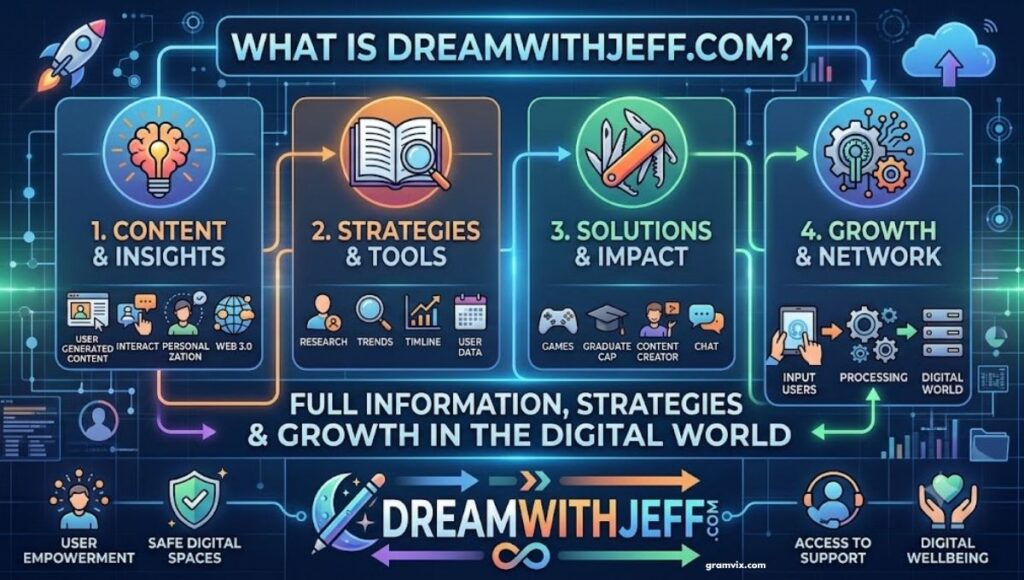
At its core, dreamwithjeff. com is a personal growth resource built around habit tracking, goal setting, journaling, and mindfulness the four things that actually move the needle on long-term change. It isn’t a hype machine. You won’t find countdown timers pressuring you to “unlock your potential in 30 days” or influencer-style promises that a single morning routine will fix your entire life.
Instead, think of dreamwithjeff com as a structured way to turn vague intentions into daily, trackable actions. The goal isn’t inspiration. It’s implementation. That distinction sounds small, but it changes everything about how the platform is designed.
| Feature Focus | What It Actually Does |
|---|---|
| Habit Tracking | Turns big goals into small daily actions you can check off |
| Goal Setting | Breaks vague ambitions into measurable milestones |
| Journaling / Reflection | Builds self-awareness so you catch patterns early |
| Mindfulness Practice | Improves focus and emotional regulation over time |
Why Most Personal Growth Advice Fails
Here’s the uncomfortable truth: information isn’t the problem anymore. You could read a hundred articles on productivity this week and still procrastinate on Tuesday. So what’s actually going wrong?
Motivation is emotional, not structural. You feel inspired one day and exhausted the next, and neither state has much to do with whether your habits stick. Relying on motivation is like building a house on sand it might hold for a while, but the first storm takes it down.
Information overload creates paralysis. When you’re bombarded with fifteen different productivity systems, three habit-tracking apps, and endless “life hack” videos, choosing becomes exhausting on its own. Many people quit before they even start, simply because they can’t decide where to begin.
Perfectionism quietly kills progress. You skip one day of your new habit, feel like you’ve already failed, and abandon the whole plan. This “all-or-nothing” thinking is one of the most common reasons people give up on personal development within the first month.
The Core Philosophy: Systems Beat Motivation
If there’s one idea that defines dreamwithjeff . com, it’s this: systems create results, motivation creates moments. A system is something you follow regardless of how you feel. Motivation is a mood. One is reliable. The other isn’t.
This mirrors research popularized by author James Clear in Atomic Habits, which argues that people don’t rise to the level of their goals — they fall to the level of their systems. In other words, the person who has a five-minute daily writing habit will out-produce the person who “waits to feel inspired” nearly every time.
Self-awareness plays a supporting role here too. Without understanding your own patterns when you procrastinate, what triggers a bad habit, why you abandon plans by week two you end up repeating the same mistakes in a new outfit. That’s why journaling and reflection sit right alongside habit tracking rather than being treated as a separate, optional extra.
How Goal-Setting Actually Works Here
Big goals fail for a simple reason: they’re too abstract to act on today. “Get healthier” doesn’t tell you what to do this Tuesday morning. “Walk for 15 minutes after breakfast” does.
Dreamwithjeff com structures goal-setting around three layers:
- The outcome — what you ultimately want (lose 20 pounds, save $5,000, finish a manuscript)
- The process — the daily or weekly action that actually produces that outcome
- The tracker — a visible record so you can see progress instead of guessing at it
Visible progress matters more than people expect. Psychologically, seeing a streak of checkmarks — even small ones — triggers a mild dopamine response that reinforces the behavior. It’s a small feedback loop, but it’s the same loop that keeps people opening the same apps every day, just pointed at something useful instead.
Habit Formation, in Plain Terms
Every habit follows a loop: a cue triggers a craving, which drives a response, which delivers a reward. This model, drawn from behavioral psychology and popularized by writers like Charles Duhigg, explains why habits are so hard to break and, more usefully, how to build better ones on purpose.
A few practical takeaways worth remembering:
- Shrink the habit until it’s almost too easy to skip. One push-up beats a “30-minute workout” you’ll avoid starting.
- Attach new habits to existing ones. “After I pour my coffee, I’ll write one sentence” works better than a floating, unanchored goal.
- Track consistency, not intensity. Showing up matters more than how much you do on any single day.
“You don’t rise to the level of your goals. You fall to the level of your systems.” a principle central to modern habit-formation research
Mindfulness as a Focus Tool, Not a Buzzword
Mindfulness gets thrown around a lot, often stripped of any real meaning. Here, it means something specific: noticing your mental state before it controls your behavior. Most people live reactively checking a notification, reacting to an email, snapping at a comment without ever pausing to notice the pattern.
Research consistently links mindfulness practice to improved emotional regulation and better decision-making under stress. You don’t need an hour-long meditation session to benefit. A few minutes of quiet breathing before checking your phone in the morning, or a short pause before responding to a stressful message, can meaningfully change your day.
Simple mindfulness habits that actually stick include:
- Two minutes of focused breathing before starting work
- A one-line journal entry naming how you feel before bed
- A phone-free walk, even a short one
Self-Discovery: Understanding Before Changing
You can’t fix a pattern you haven’t noticed. That’s the entire logic behind building reflection into a growth system instead of treating it as an afterthought. A few honest questions worth sitting with:
- When do I usually abandon a new habit and what happens right before that moment?
- What am I avoiding by staying busy?
- Which of my current routines actually align with what I say I want?
These aren’t rhetorical. Answering them honestly, even briefly, tends to reveal more than another hour of scrolling productivity content ever will.
Burnout and Energy Management
Hustle culture sells constant output as a virtue. In practice, it often produces the opposite: exhaustion, resentment, and eventually, complete disengagement. Energy management, not time management, is the real lever. You can have eight free hours and still get nothing done if you’re mentally depleted.
Recovery isn’t a reward you earn after finishing your goals it’s part of the system that lets you keep going. Skipping it isn’t discipline. It’s a shortcut to burnout.
Focus in a World Built to Fragment It
Multitasking feels productive but measurably isn’t. Studies on task-switching consistently show that shifting attention between tasks costs time and accuracy, even when the switch feels instant. Your brain doesn’t multitask it toggles, and each toggle has a cost.
Practical ways to protect focus:
- Reduce environmental friction — put your phone in another room while you work
- Use time blocking — assign specific hours to specific tasks instead of reacting to whatever feels urgent
- Limit dopamine-driven interruptions — notifications are designed to pull your attention; you have to actively resist that design
Applying This to Financial Goals
The same principles that build a workout habit build a savings habit. Clarity comes first: “save more” isn’t a goal, but “save $200 a month automatically” is. From there, consistency does the heavy lifting — a small, repeated action compounds into a meaningfully different financial position over a year or two.
Dreamwithjeff.com vs. Typical Productivity Tools
Most productivity apps optimize for output: more tasks completed, more boxes checked. Dreamwithjeff com takes a broader view, treating habits, mindfulness, and reflection as equally important to raw task completion. The difference shows up in tone as much as features — it’s built around sustainability rather than intensity.
How to Actually Use the Platform Well
- Start smaller than feels necessary. A habit that feels almost too easy is far more likely to survive a bad week.
- Focus on one area first. Trying to overhaul fitness, finances, and focus simultaneously usually means improving none of them.
- Track progress somewhere visible. A streak you can see is a streak you’re more likely to protect.
- Build around your actual schedule, not the idealized one you wish you had.
Common Mistakes That Stall Growth
- Consuming without implementing — reading about habits isn’t the same as building one
- Depending on motivation instead of a repeatable system
- Ignoring recovery until burnout forces the issue
- Chasing perfection, then quitting entirely after one missed day
Who This Actually Helps
- Students juggling coursework who need consistent study habits, not another motivational poster
- Professionals facing burnout who need energy management more than another to-do list
- Entrepreneurs and creatives who need structure without losing flexibility
- Beginners who want a simple starting point instead of an overwhelming system
Final Thoughts
Real personal growth rarely looks dramatic. It looks like a five-minute habit repeated on a Tuesday you didn’t feel like showing up for. That’s the philosophy running through dreamwithjeff . com — trade the chase for motivation for a system that survives your actual, busy, imperfect life. Start smaller than you think you need to, track what matters, and give the process time to compound.