Language can feel tricky sometimes. A tiny word swap changes everything. That is exactly what happens with other than vs other then. One version is correct in standard English. The other is almost always a mistake that slips through quickly typed sentences.
If you’ve ever paused mid-sentence wondering about other than or other then which one is correct meaning, you’re not alone. Even native speakers mix these up in casual writing.
Let’s fix that confusion completely.
Table of Contents
Other Than or Other Then Which One Is Correct
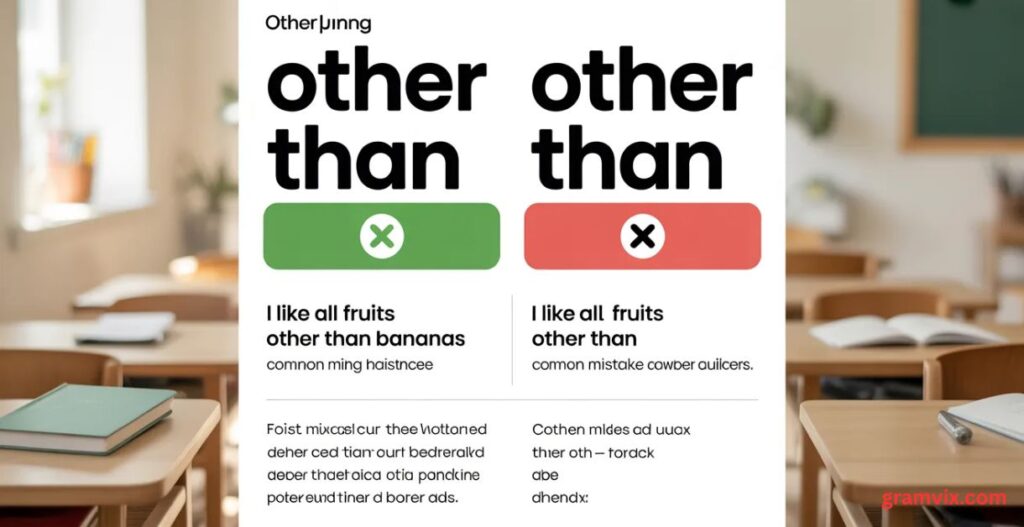
Here’s the simple truth:
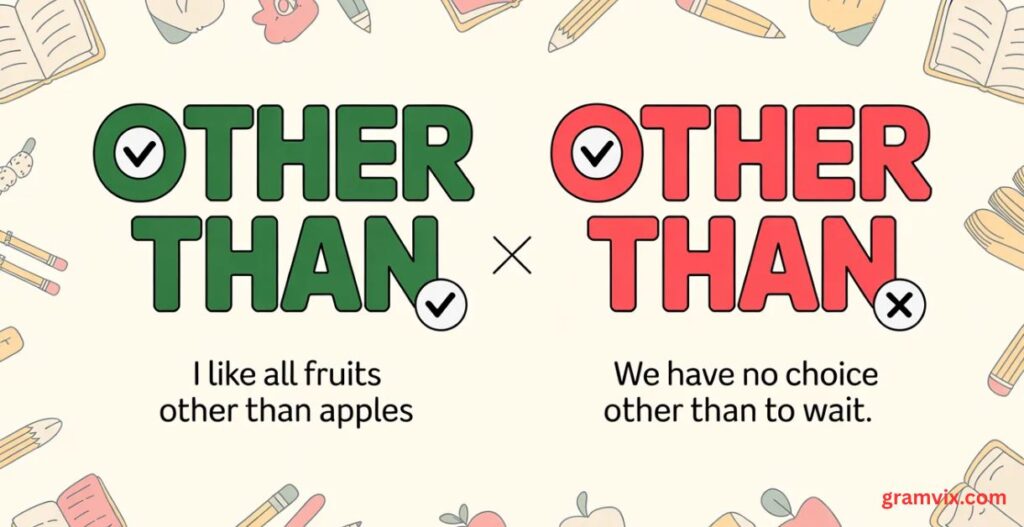
- Correct: other than
- Incorrect (in most cases): other then
“Other than” is used in real English to show exception or exclusion.
“Other then” usually comes from a spelling or typing error.
So if you remember one thing, make it this:
“Than compares. Then shows time.”
That small mental trick solves most confusion instantly.
Why People Confuse Other Than and Other Then
This mistake is extremely common in common grammar mistakes English learners make, and there are a few clear reasons why.
Sound similarity
When spoken, “than” and “then” sound almost identical in many accents. Your brain doesn’t catch the difference.
Fast typing habits
People type quickly and rely on instinct instead of checking grammar.
Weak exposure to formal writing
In texting culture, correctness often takes a back seat.
Autocorrect limitations
Grammar correction tools don’t always flag “other then” because it looks valid.
So the confusion is not random. It comes from how we use language daily.
The Core Difference Between Than and Then
To understand difference between than and then, you need to break them into their basic functions.
What “Than” Means (Comparison and Exception)
“Than” is a comparison word. It shows difference between two things.
It also works in exception phrases like other than meaning “except”.
Core uses of “than”:
- Comparison: taller than, faster than
- Exception: other than, nothing other than
- Preference: rather than
Simple idea:
“Than” is about comparing or excluding.
What “Then” Means (Time and Sequence)
“Then” is about order or time.
It tells what happens next.
Core uses of “then”:
- Time sequence: I ate, then I slept
- Condition: If X happens, then Y follows
- Result: Do this, then that
Simple idea:
“Then” is about what comes next in time or logic.
Why “Other Than” Is Grammatically Correct
The phrase correct usage of other than appears in many writing contexts because it is structurally sound.
“Other than” acts as a prepositional phrase meaning:
- except for
- apart from
- excluding
Real meaning in action:
- I like all fruits other than mangoes.
- She answered all questions other than the last one.
Here, “other than” removes something from a group.
This is why exception vs comparison words matter so much in grammar understanding.
Clear Examples of Correct Usage of Other Than
Let’s look at real than vs then examples in context:
- I have no plans other than resting today.
- Other than that mistake, the report looks perfect.
- No one other than him understood the problem.
- She eats everything other than spicy food.
Key pattern:
“Other than” always introduces what is excluded.
Why “Other Then” Is Usually Wrong
Now let’s break down other then grammar issues.
“Then” does not show comparison or exception. It shows time or sequence. So when you say “other then,” you create a syntax error detection problem in writing.
Why it fails:
- It doesn’t match English grammar rules than then
- It doesn’t create logical meaning in most sentences
- It confuses readers instantly
Incorrect examples:
- I like all fruits other then apples ❌
- Other then that, I’m fine ❌
A reader will immediately feel something is off, even if they can guess the meaning.
That hurts sentence clarity and writing proficiency.
Can “Other Then” Ever Be Correct?
Yes, but only in a very narrow situation.
If “then” refers to time, it can appear next to “other,” but not as a fixed phrase.
Example:
- The manager spoke to the employees, and other then left the room.
However, this is rare and awkward in modern usage. Most native writers avoid it completely.
So in practical writing, treat “other then” as incorrect.
Comparison Table: Other Than vs Other Then
| Feature | Other Than | Other Then |
|---|---|---|
| Grammar role | Exception / exclusion | Time sequence |
| Meaning clarity | Clear and standard | Confusing or incorrect |
| Formal writing use | Yes | No |
| Common usage | Very high | Rare / incorrect |
| Example | Other than you, no one came | Rare and unnatural |
This table helps reinforce language understanding quickly.
Common Phrases That Use “Other Than”
Understanding real usage improves English writing improvement faster than memorization.
Other than that meaning
Used to transition thoughts:
- Other than that, everything is fine.
- Other than that issue, the system works well.
Other than the
Used for exclusion:
- Other than the final test, I passed all exams.
Other than in a sentence
- There is nothing other than silence in the room.
These patterns build natural fluency.
Real-Life Writing Scenarios
Let’s apply professional writing clarity in real situations.
Email Example (Correct)
Subject: Project Update
Everything is complete other than the final review. I will send it tomorrow.
Email Example (Incorrect)
Everything is complete other then the final review.
The second version looks careless. It weakens trust in professional communication.
Chat Example
Correct:
- I’m free other than Friday.
Incorrect:
- I’m free other then Friday.
Even in casual chats, correctness improves perception.
Academic Writing Example
Correct:
- Other than minor errors, the essay is well structured.
Incorrect:
- Other then minor errors, the essay is well structured.
In academic grading, small errors affect evaluation.
Mnemonic Trick to Remember the Difference
Here’s a simple memory trick:
- Than = comparison or exclusion
- Then = time or sequence
Think of it like this:
“Than compares things like size or amount. Then moves things forward in time.”
That association sticks quickly.
How This Mistake Affects Writing Credibility
Small grammar issues impact writing proficiency more than people think.
Effects include:
- Lower trust in professional emails
- Reduced clarity in academic writing
- Perception of poor attention to detail
- Weak sentence clarity
Hiring managers often notice patterns like this instantly.
A 2023 Grammarly communication report found that:
- 76% of professionals judge writing quality based on grammar accuracy
- Even minor mistakes affect credibility in business communication
That’s why spelling mistake detection and careful proofreading matter.
Proofreading Strategies to Catch the Error
You don’t need complex tools. You need habits.
Read aloud method
If you say it out loud, “other then” usually feels wrong.
Swap test
Replace with “except for.”
- If it fits → use “than”
Example:
- Other than the delay → Except for the delay ✔
Grammar tools (use carefully)
Tools help with grammar correction, but they don’t catch everything. Always review manually.
Final Clarity Checklist Before You Use It
Before sending anything, check:
- Did I mean comparison or exception?
- Can I replace it with “except for”?
- Does “then” imply time in this sentence?
If the answer is no, choose than.
Final Takeaway
The confusion between other than or other then which one is correct examples comes down to one simple rule.
“Than” belongs to comparisons and exceptions.
“Then” belongs to time and sequence.
Once you see that pattern, the mistake becomes easy to avoid.
So next time you write, slow down for half a second. That tiny pause improves professional writing clarity, strengthens word usage accuracy, and keeps your message clean.
And honestly, that’s what good writing is all about.