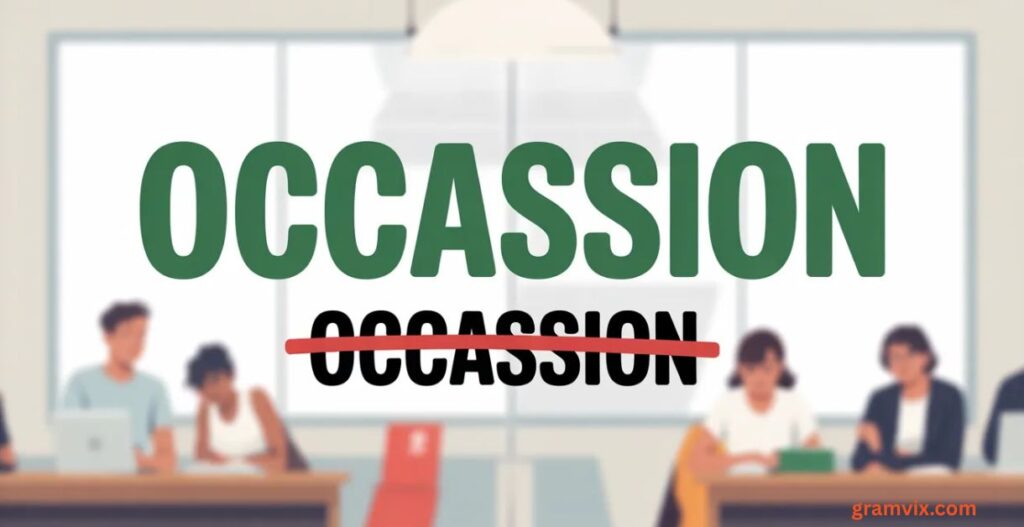
Spelling mistakes sneak into your writing when you least expect them. One of the most common slip-ups is writing “ocassion” instead of “occasion.”
It looks harmless. It sounds right. Yet it’s wrong.
If you’ve ever paused mid-sentence wondering “ocassion or occasion?”, you’re not alone. This guide clears up the confusion once and for all. You’ll learn the correct spelling of occasion, why people get it wrong, and how to remember it without second-guessing yourself.
Table of Contents
Occasion or Ocassion?
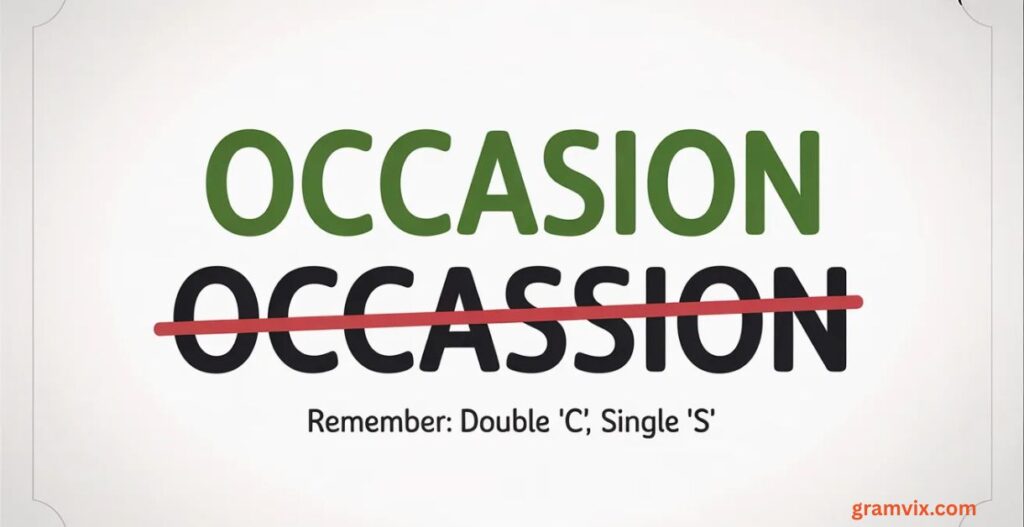
Let’s settle it fast.
- ✅ Correct: occasion
- ❌ Incorrect: ocassion
If you’re asking, “what is the correct spelling of occasion?” — that’s your answer.
Examples
- “This is a special occasion.” ✅
- “This is a special ocassion.” ❌
Short and simple. But there’s more going on behind the scenes.
Why “Occasion” Is Spelled This Way
The spelling of occasion isn’t random. It follows patterns rooted in Latin and long-standing English conventions.
Break It Down
- oc + ca + sion
- Two c’s, one s
That structure matters.
English Spelling Rules Double Letters
English often doubles consonants to preserve sound or structure. You see it in words like:
- accommodate
- necessary
- recommend
The same principle explains why “occasion” uses double c. Understanding English spelling rules double letters helps you avoid guesswork.
The Real Reason People Misspell “Occasion”
So why do people still get it wrong?
If you’ve ever typed ocassion, you’ve run into one of these common traps.
Common Causes
- Sound confusion
The word sounds like “uh-KAY-zhun.” You don’t hear the double c, so you skip it. - Overcompensation
Some writers add extra letters and end up with occassion. - Typing speed
Fast typing leads to dropped letters. - Visual memory shortcuts
Your brain simplifies what it sees.
This explains the confusion behind occassion or occasion and why the mistake keeps showing up.
Common Misspellings of Occasion
You’ll find these errors everywhere, from texts to professional emails.
Common Misspellings of Occasion
| Incorrect | Correct |
|---|---|
| ocassion | occasion |
| occassion | occasion |
| ocasional | occasional |
| ocasions | occasions |
If you’re wondering, “is ocassion correct or incorrect?”, the answer is clear. It’s always incorrect.
These are classic spelling mistakes in English writing.
Simple Tricks to Remember the Correct Spelling
You don’t need to memorize blindly. A few smart tricks make it stick.
Spelling Tips for Occasion
- Double C, Single S Rule
“Occasion has two c’s and one s.” - Memory Hook
“A special occasion deserves two cakes (cc) but only one slice (s).” - Chunk It
- oc-ca-sion
- Write It Out
Repetition builds muscle memory.
These strategies help you improve writing accuracy and clarity without overthinking.
Pronunciation vs Spelling: Why Your Ear Misleads You
The occasion pronunciation plays a big role in confusion.
How It Sounds
- /əˈkeɪʒən/ → “uh-KAY-zhun”
Notice how the double c disappears when spoken.
That’s why relying on sound alone leads to mistakes in occasion spelling.
English spelling often reflects history, not just pronunciation.
Occasion Meaning and Usage
Understanding the occasion meaning helps you use it correctly.
Definition
An occasion can mean:
- A special event
- A specific time
- A reason for something
Examples of Occasion in Sentences
- “We met on a memorable occasion.”
- “Birthdays are special occasions.”
- “This isn’t the right occasion for jokes.”
These occasion examples show how versatile the word is.
Occasion Plural and Related Forms
Spelling doesn’t stop at one word.
Word Forms
| Form | Example |
|---|---|
| Singular | occasion |
| Plural | occasions |
| Adjective | occasional |
| Adverb | occasionally |
Important Notes
- The occasion plural is occasions
- Many people struggle with occasionally spelling
Example:
- “We occasionally meet on special occasions.”
Learning related forms prevents repeated mistakes.
Occasion in Professional Writing
In professional settings, details matter.
A single occasion spelling mistake can affect how people view your work.
Examples in Professional Context
- “On this occasion, we celebrate our success.”
- “This report marks an important occasion.”
Using correct spelling strengthens credibility and shows attention to detail in occasion in professional writing.
Everyday Usage: Casual vs Formal
The word fits both casual and formal contexts.
Casual Examples
- “We hang out on rare occasions.”
- “It was a fun occasion.”
Formal Examples
- “This occasion marks a significant milestone.”
Knowing when and how to use it improves fluency.
Occasion vs Ocassion Difference
Let’s make it crystal clear.
Occasion vs Ocassion Difference
| Feature | Occasion | Ocassion |
|---|---|---|
| Correct spelling | Yes | No |
| Used in writing | Always | Never |
| Accepted in English | Yes | No |
There’s no middle ground here.
Difference Between Similar Spellings in English
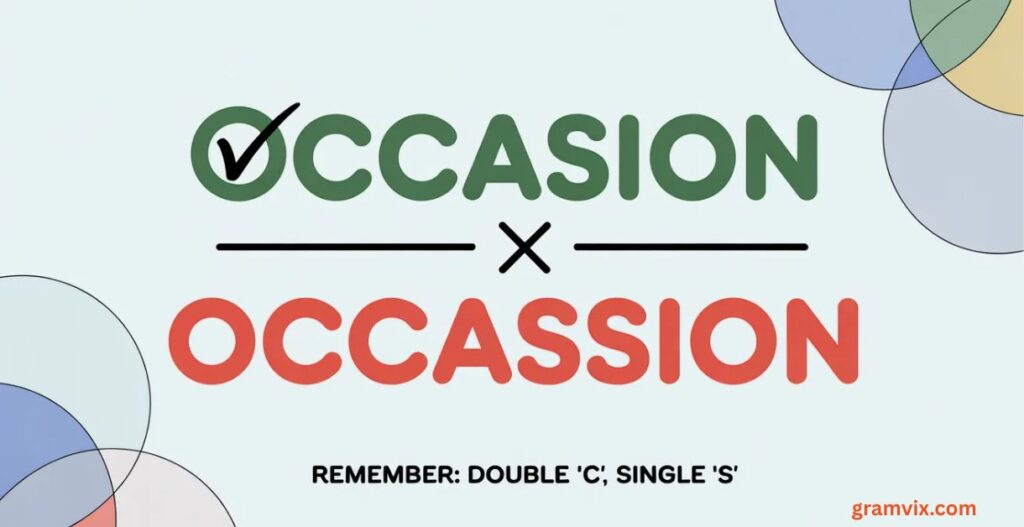
“Occasion” isn’t the only tricky word.
Similar Confusing Words
- accommodation vs accomodation
- necessary vs neccessary
- separate vs seperate
These examples highlight common patterns in difference between similar spellings in English.
How to Remember Spelling of Occasion
Still unsure how to lock it in?
Practical Strategies
- Write it daily for a few days
- Use it in real sentences
- Associate it with events
- Test yourself regularly
These habits reinforce the correct usage of occasion in sentences.
Quick Practice Section
Try this.
Fill in the Blank
- This is a special ______.
- We meet on rare ______.
Answers
- occasion
- occasions
Spot the Error
- “This is an important ocassion.”
Correct version:
- “This is an important occasion.”
Tools That Help (But Don’t Replace Learning)
Tools can help, but they’re not perfect.
Helpful Options
- Spellcheck
- Grammar tools
- Writing assistants
They won’t always catch every occasion spelling mistake, so don’t rely on them completely.
Occasion Spelling UK vs US
Here’s one easy win.
Occasion Spelling UK
- Same as US: occasion
No variation. No confusion.
Tips to Avoid Spelling Errors
Avoiding mistakes takes consistent effort.
Tips to Avoid Spelling Errors
- Slow down when typing
- Proofread your work
- Learn patterns
- Track your common errors
These steps help you improve writing accuracy and clarity.
Case Study: A Small Mistake, Big Impact
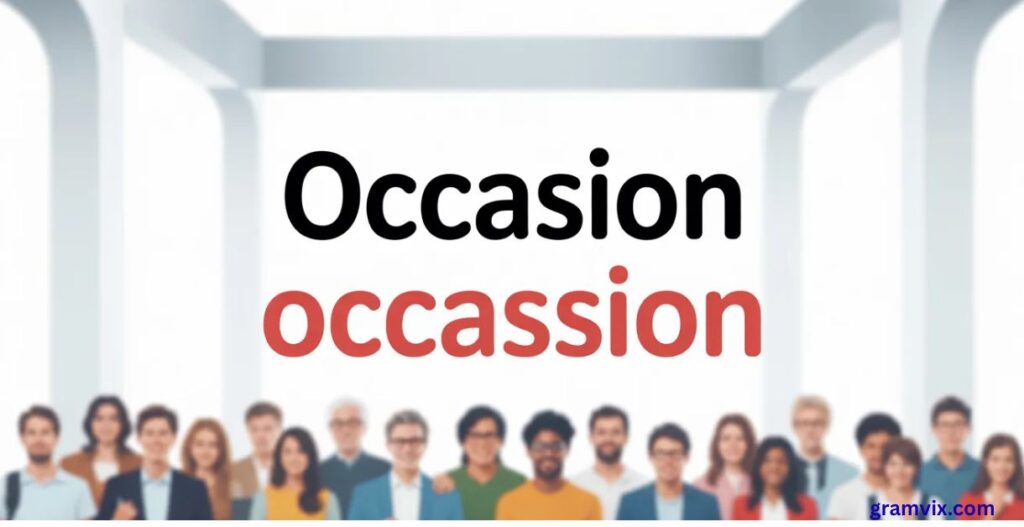
Imagine sending this email:
“I’m excited for this ocassion.”
It feels minor. Yet it signals carelessness.
Now compare:
“I’m excited for this occasion.”
Same sentence. Stronger impression.
That’s the power of getting small details right.
Quick Recap
- Correct: occasion
- Incorrect: ocassion
- Rule: double c, single s
- Don’t rely only on pronunciation
Final Tips for Writers
Strong writing comes from small, consistent improvements.
- Practice regularly
- Review your writing
- Focus on patterns
Mastering words like this reduces spelling mistakes in English writing and boosts confidence.
Conclusion: Small Word, Big Difference
At first glance, occasion or ocassion feels like a minor issue. It isn’t.
Spelling reflects precision. It shapes how readers perceive your work.
Remember:
- Two c’s
- One s
Once it sticks, you won’t hesitate again.
Because in writing, even a single letter can change everything.