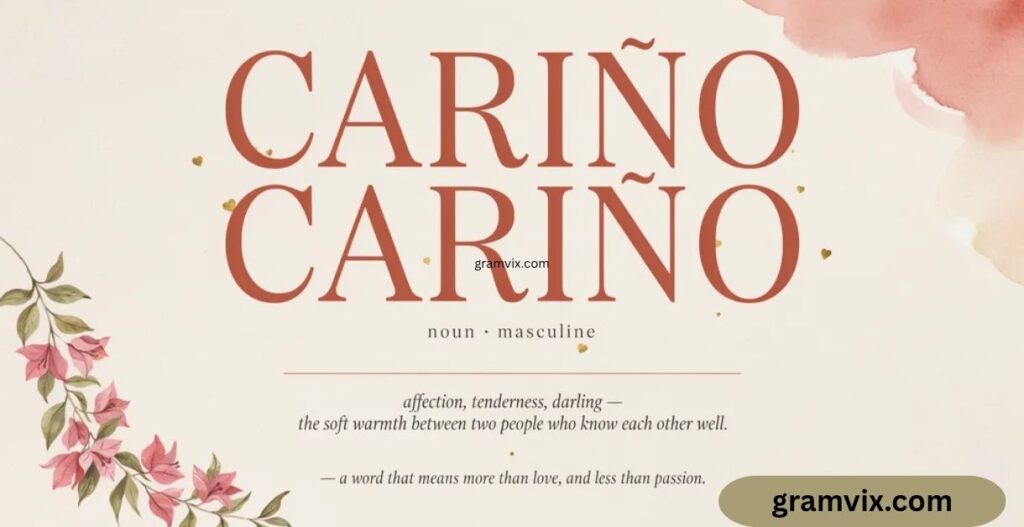
If you’ve ever heard someone say “Hola, cariño” in a Spanish movie, a song, or during a conversation, you may have wondered what it actually means. At first glance, the Spanish word cariño seems easy to translate. However, once you hear native speakers use it in different situations, you’ll quickly realize that no single English word captures its full meaning.
The cariño meaning goes beyond simple affection. Depending on the context, it can express love, tenderness, fondness, emotional connection, warmth, care, compassion, intimacy, or simply a friendly gesture toward someone. It can describe how you feel about another person, or it can become a loving nickname for someone close to you.
Table of Contents
What Does Cariño Mean?

The most direct answer to What does cariño mean is:
Cariño means affection, fondness, tenderness, or love.
Unlike many English words, cariño works both as a noun and as a term of endearment.
As a noun, it refers to the emotional bond or affection you feel toward someone.
For example:
- Le tengo mucho cariño.
- I have a lot of affection for them.
As a nickname, it becomes something similar to:
- Darling
- Honey
- Dear
- Sweetheart
- Beloved
Even these translations don’t fully capture the warmth behind the word.
Quick Definition Table
| Spanish Word | Literal Meaning | Common English Equivalent |
|---|---|---|
| Cariño | Affection | Darling |
| Cariño | Fondness | Honey |
| Cariño | Tenderness | Sweetheart |
| Cariño | Love | Dear |
| Cariño | Emotional attachment | Beloved |
The cariño meaning in English always depends on the relationship between the speakers.
Cariño Meaning in English
Many learners search for Cariño meaning in English hoping for a single perfect translation.
Unfortunately, there isn’t one.
That’s because English separates emotional concepts into several different words, while Spanish often allows cariño to cover all of them naturally.
Common English Translations
| Spanish | English Translation | Best Used When |
|---|---|---|
| Cariño | Darling | Romantic partner |
| Cariño | Honey | Casual affection |
| Cariño | Dear | Friendly conversation |
| Cariño | Sweetheart | Family or romantic |
| Cariño | Love | Common in British English |
| Cariño | Affection | Literal meaning |
Imagine someone saying:
“Gracias, cariño.”
Depending on who says it, this could mean:
- Thanks, dear.
- Thanks, sweetheart.
- Thanks, honey.
- Thanks, love.
Every translation works. None of them fully replaces the original.
That’s why many linguists include cariño among untranslatable Spanish words. Like the Portuguese word saudade or the Danish concept hygge, its emotional depth changes with context.
The Meaning of Cariño as a Noun
When used as a noun, cariño describes genuine emotional affection toward another person.
It doesn’t necessarily imply romance.
Instead, it represents feelings such as:
- Affection
- Fondness
- Care
- Compassion
- Emotional support
- Warmth
- Emotional connection
For example:
Tengo mucho cariño por mi abuela.
Translation:
I have great affection for my grandmother.
Here, love would sound stronger than intended in English. Affection communicates the idea more accurately.
Another example:
Le tengo mucho cariño a mi profesor.
This means you deeply appreciate and respect your teacher. It doesn’t suggest romantic feelings.
Cariño as a Spanish Term of Endearment
One reason the Spanish word cariño is so popular is that people also use it as a nickname.
It’s one of the most common examples of a Spanish term of endearment.
Native speakers often greet someone by saying:
- Hola, cariño.
- Buenos días, cariño.
- ¿Cómo estás, cariño?
- Gracias, cariño.
- Hasta luego, cariño.
In English, these might become:
- Hi, sweetheart.
- Good morning, dear.
- How are you, honey?
- Thanks, darling.
Again, context matters.
A grandmother may call her grandchild cariño.
A wife may call her husband cariño.
A shopkeeper in Spain may even call a regular customer cariño simply to sound warm and friendly.
How Do You Pronounce Cariño?
Many learners struggle because of the Spanish letter ñ.
IPA Pronunciation
/kaˈɾi.ɲo/
Easy Pronunciation Guide
kah-REE-nyoh
The sound ñ resembles the “ny” in the word canyon.
Common mistakes include:
- Saying “carino”
- Pronouncing the “n” like English
- Stressing the first syllable
Remember that the stress falls on ri:
ca-RI-ño
Learning proper pronunciation makes your Spanish vocabulary sound much more natural.
Is Cariño Romantic?
Many beginners assume cariño always refers to romance.
It doesn’t.
That’s one of the biggest misconceptions about the word.
Between Romantic Partners
Couples frequently use cariño instead of repeating each other’s names.
Examples include:
- Buenas noches, cariño.
- Te extraño, cariño.
- Gracias por todo, cariño.
The word expresses intimacy without sounding overly dramatic.
Between Family Members
Parents often call their children:
- Cariño
- Mi cariño
- Cariñito
Grandparents also use it frequently.
It creates a feeling of safety, comfort, and emotional closeness.
Between Friends
Close friends sometimes use cariño, especially among women.
Example:
Gracias, cariño. Eres la mejor.
Translation:
Thanks, dear. You’re the best.
No romantic meaning exists here.
In Everyday Customer Service
Visitors to Spain often hear waiters, cashiers, or older adults saying:
- ¿Qué deseas, cariño?
- Gracias, cariño.
This surprises English speakers.
The speaker isn’t flirting.
Instead, they’re simply creating a warm welcome through friendly communication.
This usage reflects an important part of Spanish culture and language, where friendly emotional expression often appears in everyday interactions.
How to Use Cariño Correctly

Understanding how to use cariño means paying attention to your relationship with the other person.
Generally, it’s appropriate with:
- Romantic partner
- Husband or wife
- Family
- Children
- Very close friends
- Someone you know well
Avoid using it in:
- Formal interviews
- Professional emails
- Business meetings
- Conversations with strangers in countries where it isn’t common
Different regions have different customs.
In Spain, strangers sometimes use affectionate language casually.
In parts of Latin America, people reserve cariño for closer relationships.
Cariño Examples in Everyday Conversations
The easiest way to understand the word is through real dialogue.
Between a Couple
María:
Hola, cariño. ¿Cómo estuvo tu día?
Carlos:
Mucho mejor ahora que te veo.
Between Parent and Child
Mother:
Ven aquí, cariño.
Child:
Ya voy.
Between Friends
Laura:
Gracias por ayudarme.
Ana:
De nada, cariño.
At a Restaurant
Waiter:
¿Qué vas a pedir, cariño?
Customer:
Una paella, por favor.
The waiter simply sounds welcoming.
Cariño vs Other Spanish Romantic Words
Spanish contains many Spanish romantic words, but each carries its own emotional tone.
| Word | Meaning | Romantic | Family | Friends |
|---|---|---|---|---|
| Cariño | Affection | ✔ | ✔ | ✔ |
| Mi amor | My love | ✔ | Sometimes | Rare |
| Corazón | Sweetheart | ✔ | ✔ | Sometimes |
| Tesoro | Treasure | ✔ | ✔ | Rare |
| Querido | Dear | Sometimes | ✔ | ✔ |
| Cielo | Heaven | ✔ | ✔ | Sometimes |
Notice that cariño is the most flexible option.
That’s why native speakers rely on it so often.
Related Words You Should Know
Learning similar vocabulary expands your understanding of Spanish affection words.
Con cariño meaning
The phrase con cariño meaning is:
With affection
With love
People frequently write it in:
- Greeting cards
- Birthday cards
- Christmas cards
- Letters
- Gifts
- Handmade with love crafts
For example:
Con cariño,
María
This functions as a warm sign-off.
Tener cariño meaning
The expression tener cariño meaning is:
To feel affection for someone.
Example:
Le tengo mucho cariño.
Translation:
I care deeply about them.
Cariñoso meaning
Cariñoso meaning refers to an adjective.
It describes someone who is:
- Affectionate
- Loving
- Caring
- Warm
Example:
Es un niño muy cariñoso.
Translation:
He’s a very affectionate child.
Cariñito meaning
Cariñito meaning comes from the diminutive form of cariño.
It literally means:
- Little darling
- Little sweetheart
Adding -ito increases tenderness rather than changing the core meaning.
Parents commonly use it with young children.
Why Cariño Is Difficult to Translate
Language experts often explain that some words describe emotional experiences rather than concrete objects.
That’s why the English translation changes according to context.
Words like:
- Portuguese saudade
- Danish hygge
- Japanese ikigai
carry meanings that stretch beyond one English equivalent.
The same applies to cariño.
It’s both a word and an emotional experience.
Its meaning depends on:
- Tone of voice
- Relationship
- Situation
- Culture
- Shared history between speakers
This makes it an excellent example of how semantics, linguistic concept, and emotional vocabulary interact in real-world communication.
Conclusion
The carino meaning goes far beyond a simple dictionary definition. Whether you’re studying Spanish language meanings, improving your Spanish learning, or simply curious about What does cariño mean in English, understanding the cultural context is just as important as knowing the translation.
At its heart, cariño expresses affection, love, tenderness, fondness, and genuine care. Native speakers use it with a romantic partner, family, friends, and even in everyday conversations to create warmth and connection. Depending on the situation, the cariño meaning in English might be dear, honey, sweetheart, or beloved, but none of these captures every nuance of the original Spanish.
As you continue building your Spanish vocabulary, you’ll notice that Spanish expressions of love, Spanish greetings, and other affectionate Spanish words often reflect the importance of relationships in Spanish culture and language. Learning these expressions doesn’t just improve your translation skills. It also helps you understand how language conveys emotion, builds trust, and strengthens human connection.